
REal Estate Edge
Lets Chat
How Do You Get Your Team to Actually Buy Into Your Vision?
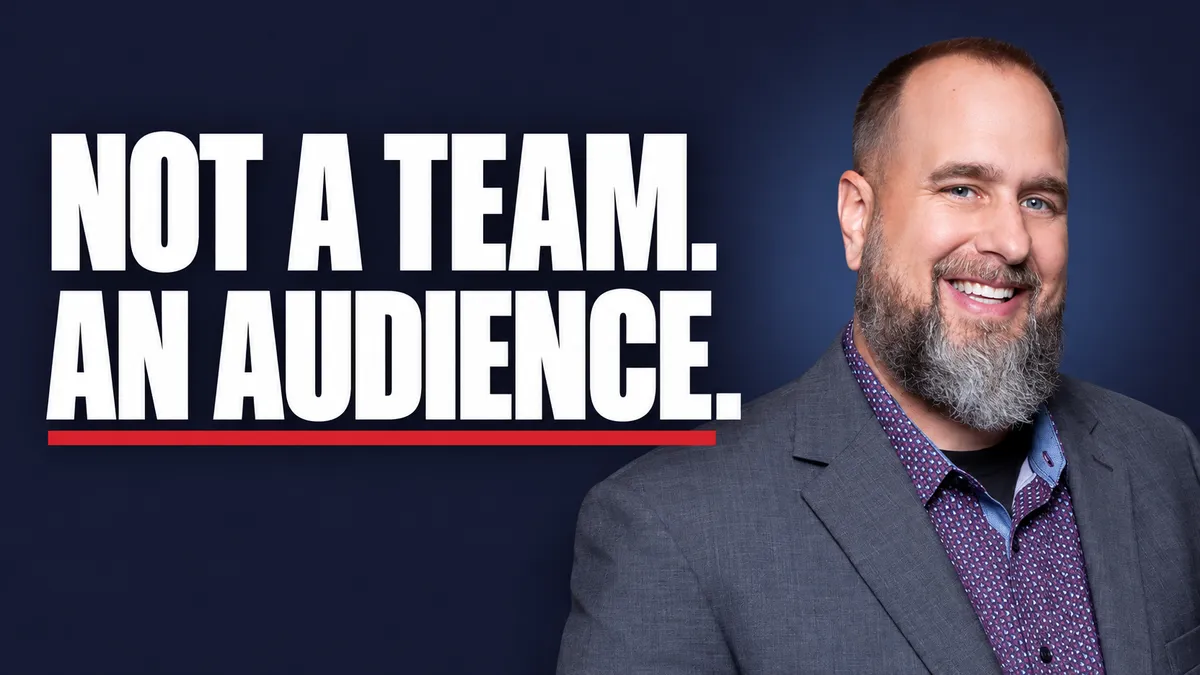
How do I get my team to actually buy into my vision? You let their vision change yours. Team buy-in is not something you win with a better pitch or a bigger title; it shows up the moment people can see their own thinking inside the plan. A vision that only ever runs in one direction, yours to them, never becomes a team. It stays an audience. I learned that the slow way, and it started with a job I didn’t get.
Does a title make you a leader?
Right out of college I was sure I deserved a leadership role because I had a degree. It turns out that was the wrong reason.
I spent years at a company I liked, with bosses I respected, wanting more from my role. Looking back, I’m not sure what I wanted it for. Myself, partly. To help grow the company, partly. Honestly, it was probably pretty selfish. I still think I could have done the job well. But that wasn’t the point.
John Maxwell describes five levels of leadership, and I was stuck at the first one: Position. I have a master’s degree, so I should get the job. I’ve done this for you, so I should get the job. What I hadn’t done was build the relationships or prove the results. The degree was real and it opened doors, but it wasn’t enough to have the title, and it wasn’t enough that I wanted it.
Here’s the part I know now that I didn’t know then: other people were equally qualified, and some were more qualified. They thought so too, and they were right. That was a lesson I had to learn.
What happens when you pitch a vision nobody asked for?
Years later I was chairing a volunteer committee working on communication and technology. Video was coming fast, and I wanted us in front of it, so I pitched a series of 30-minute tech videos.
The team didn’t shoot it down. It just didn’t land the way I expected. The energy wasn’t there. They bought the vision. They didn’t buy the execution.
So I talked with them about what was going on, and we came out with something smaller: one-minute tech tips, eight or nine or ten of them, to find out whether this was real. I had the vision and I set the vision. They’re the ones who completed it, because I had faith in the team we had built.
What we made was better than what I had pitched. And a couple of years later we did make the 30-minute videos, and we’re still making versions of that today. Not because I forced it down anyone’s throat. Because they listened to me, and better yet, I listened to them.
Most leaders inherit a vision rather than set one
This is the part people skip. Most of us are not the ones setting the vision. We’re the ones inheriting it, and we have to carry it down to everyone else. There’s a domino effect of vision creation, and each hand-off is a place where buy-in either happens or quietly doesn’t.
So the questions that matter for a team lead, paid or volunteer, are practical ones. How do you work with these people? How do you move them forward? How do you get them working inside the vision that’s been handed to you? That’s a different skill from having the best idea in the room.
What the president’s chair taught me
Serving as volunteer president made this concrete. It takes a while to get to that seat, and when you arrive, everyone congratulates you. It is genuinely hard not to get caught up in that moment, and I’m including myself. It’s great to be honored and thanked.
But Maxwell tells his team: you get a day to be mad, you get a day to be happy, then it’s time to go back to work. Same for us. Take the day. Then work hard at being the leader, keep building the team, and keep asking people what they’re here for and what they signed up for, especially when they’re volunteers.
That’s what kept pulling me back to the team concept. It was never about me. It was always about we.
Why can’t you get bigger than yourself alone?
If you want more impact in the role you’ve taken, more reach, more of whatever your vision is, you cannot get there by yourself. It’s not harder alone. It’s almost impossible alone.
The only way to be bigger than yourself is to bring people with you, and that means real team building rather than delegating tasks to people who already agree with you. Sometimes that means being okay with someone not being involved who wants to be, because they’re not the right fit. Sometimes, and this is trickier, it means convincing someone who doesn’t think they belong at that step. Share the vision, share the insight, and bring them in. When people buy in with you, they work just as hard as you do, often harder.
Building the right team isn’t about having certain people on it. It’s about having the right people at the right time, and being okay, and helping them be okay, when it isn’t their time.
Which direction does your vision run?
Here’s the test. As a leader, you want your team to see, hear, and feel your vision. Fair enough. But you also need to see, hear, and feel theirs. Hopefully they co-mingle. If they don’t, that’s the work.
A one-way vision isn’t a team. It’s an audience.
Where AI fits
Use AI as a critical thinking partner before you present. Tell it your vision and ask it to critique it, challenge you, and play the “no” person. If you don’t have enough of the right answers, you’re probably not ready to bring it to the room yet, and this is how you find out cheaply. Let it catch your blind spots. Don’t let it decide for you.
The leadership tip
Believing something isn’t a problem. Carrying it alone is.
Getting bigger than yourself means letting the team’s vision replace your moment, the same way one-minute tips replaced my 30-minute videos. A vision that only runs one direction never becomes a team. The moment you let their vision in and let it change the plan is the moment it stops being your project and starts being something that outlasts you.
So pick one idea you’re currently pitching or carrying alone. Tell people the vision, ask what they think, and ask them to challenge it. Somewhere in the middle you’ll find the answer that changes the plan.
FAQ
What are the five levels of leadership? John Maxwell’s model: Position, Permission, Production, People Development, and Pinnacle. People follow because they have to, because they want to, because of results, because of what you’ve done for them, and finally because of who you are. A title only gets you the first one.
How do I get buy-in from a volunteer team? Ask what they signed up for and what they’re there for, and keep asking. Volunteers have other jobs and other reasons for being in the room. Bring them the vision, then let their answers change the execution, the way a 30-minute video plan became one-minute tips.
What if someone wants to be on the team but isn’t the right fit? Be okay with it, and help them be okay with it. The right team isn’t a fixed list of people, it’s the right people at the right time. Sometimes the honest answer is that it isn’t their time yet, and saying so clearly is kinder than a vague yes.
Want a structured 90 days to build this with your team? Start here: https://go.thejblteam.com/90-day-breakthrough-904795

AS FEATURED IN:




Justin Letheby
1275 Butterfield Rd, suite 100,
Wheaton,IL, 60189
815-501-4416