REal Estate Edge
Lets Chat
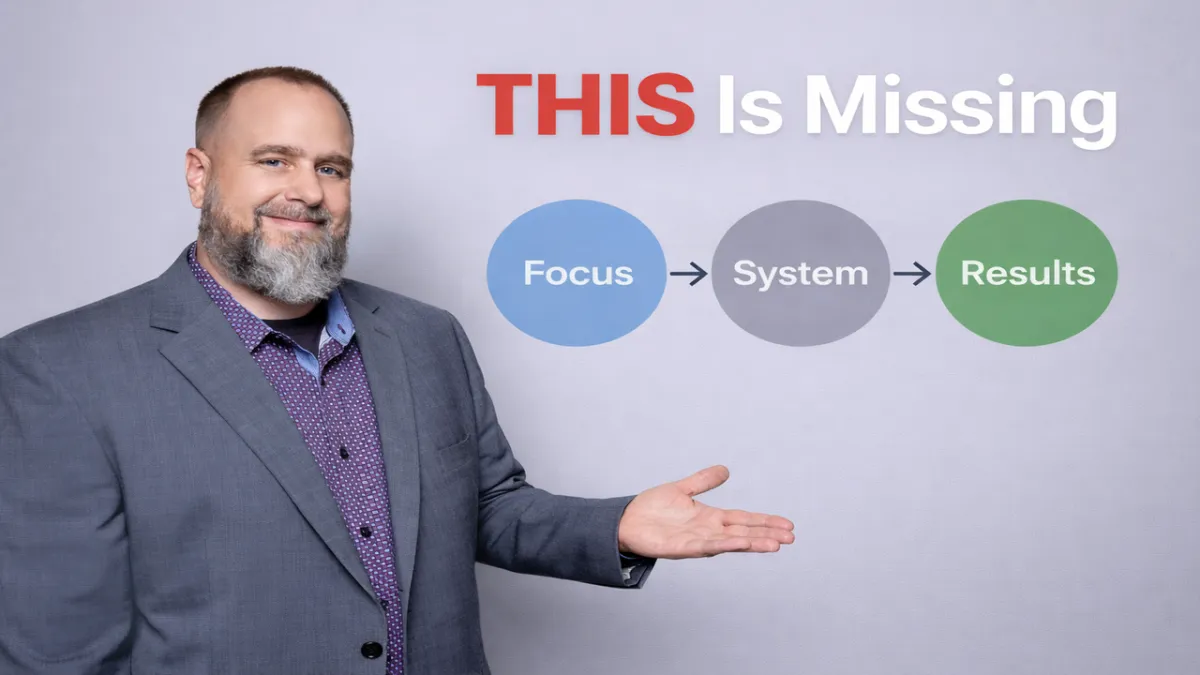
The Day I Realized I Was Causing My Own Overwhelm
The Day I Realized I Was Causing My Own Overwhelm
For a long time, my business looked productive from the outside.
I was busy.
I was learning.
I was showing up.
I was trying new ideas constantly.
And yet, I felt scattered, overwhelmed, and oddly behind.
I’d start an important project—the kind that actually moves the business forward—then something new would pop up. A video. A tool. A shiny idea. I’d jump over to that. Then another thing would catch my attention. Before long, I was working on three things at once and finishing none of them.
The breaking point came in an unexpected way: AI.
Not because AI magically fixed my problem—but because it exposed it.
I noticed that when I jumped between projects, AI did the same thing. It mirrored my behavior. When I went back to the original task, the context was fragmented. The output was scattered.
That’s when it hit me:
A scattered system will always reflect a scattered leader.
I wasn’t lazy. I wasn’t unmotivated.
I was creating my own overwhelm by refusing to slow down long enough to build clarity.
Once I saw that, I couldn’t unsee it.
The Simple System Most Small Bu…
What I Learned (The Shift That Changed Everything)
1. Overwhelm Isn’t a Hustle Problem
For years, I thought the solution was more effort, more motivation, or better discipline.
It wasn’t.
It was a systems problem.
Not software.
Not automation.
But a lack of clear decisions that removed friction from my day.
2. Focus Beats Inspiration
I stopped asking, “What should I work on next?”
And started asking, “What am I committed to finishing?”
Ideas didn’t disappear—I just stopped letting them hijack my day.
If something didn’t fit my current focus, it went on a list for later. Not ignored. Just delayed.
That one habit alone reduced stress dramatically.
3. Long-Term Goals Create Short-Term Drift
Annual goals sound inspiring, but they’re dangerously easy to procrastinate on—especially in seasonal businesses like real estate.
That’s why frameworks like the 12 Week Year worked for me. Not because they demand more hustle, but because they create a clarity filter.
Twelve weeks is long enough to prove something works—and short enough to force focus.
4. Systems Aren’t Complex—They’re Decided
A system isn’t software.
It’s a decision you don’t have to rethink.
Do I check email first—or not?
What gets worked on before noon?
What problem am I actually solving today?
Good systems reduce decision fatigue.
Bad systems (or no systems) create constant friction.
5. AI Didn’t Replace My Judgment—It Sharpened It
The biggest benefit AI gave me wasn’t speed.
It was reflection.
I started using it to:
Surface priorities
Identify friction points
Ask better questions
Build simple decision trees
AI didn’t become my brain.
It became my clarity assistant.
How to Implement This (Simple, Practical, Repeatable)
Here’s how I’d suggest someone start—without buying anything new.
Step 1: Pick One Focus for the Next 12 Weeks
Not five.
Not “everything.”
One primary outcome that actually matters.
If an idea doesn’t support that goal, it goes on a list for later.
Step 2: Build a Decision Filter
Ask yourself daily:
Does this move my current goal forward?
Is this urgent—or just interesting?
Can this decision be made once and systemized?
Clarity lives in better questions, not better tools.
Step 3: Capture Ideas Without Acting on Them
Ideas aren’t bad timing is.
Write them down.
Save them.
Revisit them later.
This keeps creativity alive without destroying focus.
Step 4: Use Tools to Reduce Thinking, Not Replace It
Whether it’s AI, a CRM, or a task manager—use tools to:
Organize
Reflect
Simplify
Not to avoid responsibility or human judgment.
Step 5: Review Weekly, Adjust Quickly
Weekly reflection matters more than perfect planning.
What worked?
What didn’t?
What created friction?
That rhythm alone lowers stress and increases confidence.
The Real Takeaway
If your business feels heavy right now, you don’t need more hustle.
You need:
Fewer decisions
Clearer priorities
Simple systems that support how you actually work
Tools don’t create clarity.
Clarity tells you which tools matter.
And once that clicks, everything gets lighter.

AS FEATURED IN:



Justin Letheby
1275 Butterfield Rd, suite 100,
Wheaton,IL, 60189
815-501-4416